
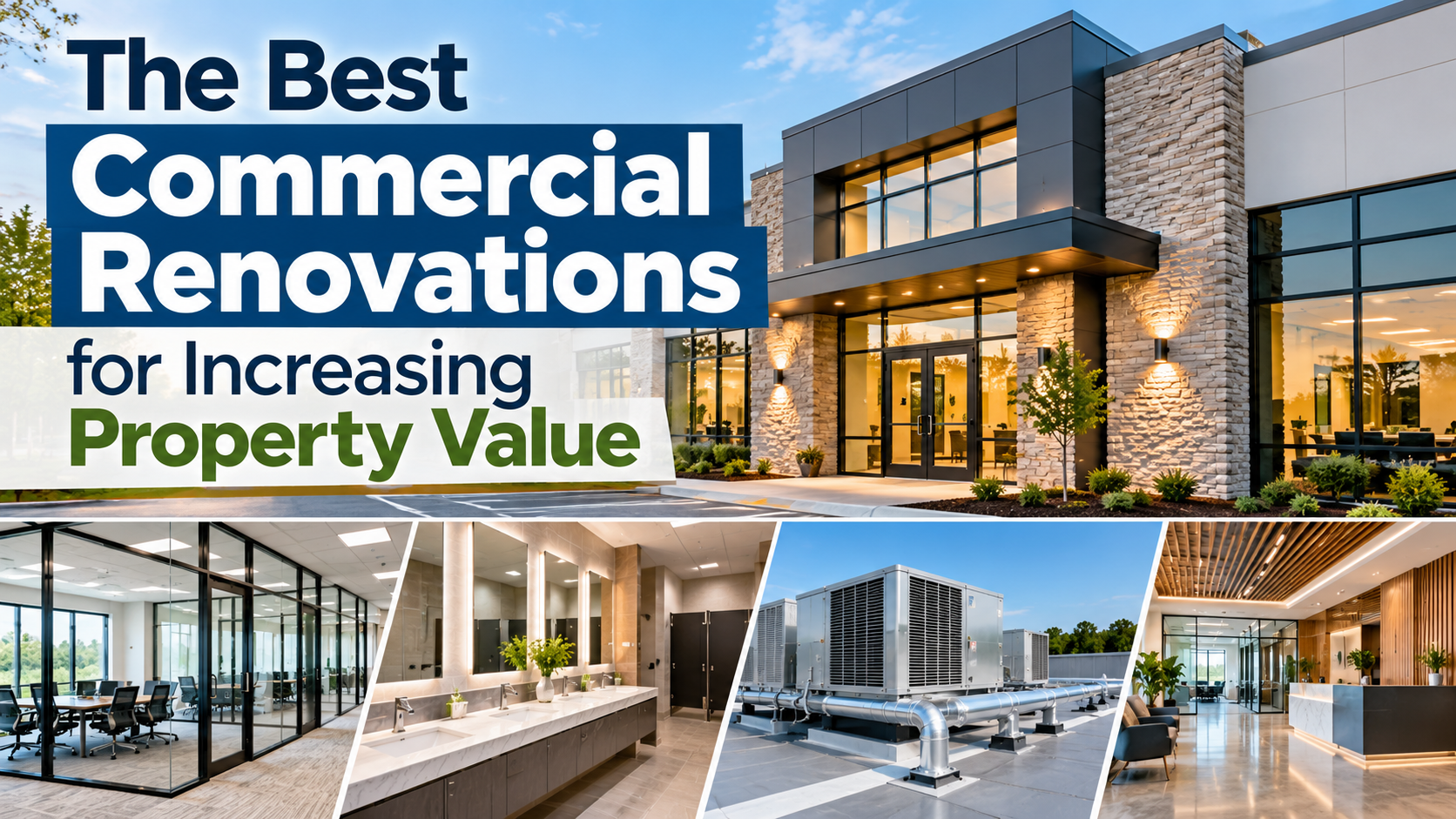
Owning commercial property is a significant investment, and maintaining or increasing its value requires more than routine maintenance. As buildings age, tenant expectations change, technology advances, and newer commercial properties enter the market, older buildings can become less competitive. Fortunately, strategic commercial renovations can help property owners improve functionality, attract tenants, and potentially increase the long-term value of their investments.
Whether you own an office building, retail center, medical facility, warehouse, or mixed-use commercial property, choosing the right improvements can make a substantial difference.
At Gainesville Commercial Contractors, we understand that commercial renovations should accomplish more than making a building look attractive. The best improvements balance appearance, functionality, efficiency, and long-term financial value.
For commercial property owners in Gainesville, FL, and throughout North Central Florida, here are some of the most worthwhile renovations to consider.
1. Modernizing Commercial Building Exteriors
First impressions matter, especially in commercial real estate. The exterior of a building is often the first thing potential tenants, customers, and investors notice.
An outdated or poorly maintained exterior can make a property less appealing, even when the interior is in excellent condition.
Exterior renovations can significantly improve a property’s appearance and marketability.
Common exterior improvements include:
- Updating building facades and architectural features
- Replacing outdated exterior finishes
- Installing modern entry doors and windows
- Improving exterior lighting
- Repairing sidewalks and pedestrian entrances
- Updating signage and storefront appearances
- Improving accessibility and building entrances
For retail centers and office buildings, a modern exterior can help businesses establish a more professional image.
In Gainesville’s competitive commercial real estate market, improving curb appeal can make a property stand out to prospective tenants.
Property value tip: Prioritize exterior improvements that enhance both appearance and durability. Materials designed to withstand Florida’s heat, humidity, and heavy rainfall may help reduce long-term maintenance requirements.
2. Renovating Office Spaces for Modern Businesses
Office environments have changed significantly over the years. Many businesses now prioritize flexible layouts, collaborative areas, comfortable workspaces, and technology-friendly environments.
Older office buildings with inefficient floor plans or outdated finishes may struggle to compete with newer commercial properties.
Modern office renovations can include:
- Reconfiguring outdated office layouts
- Adding private meeting rooms
- Creating flexible workspaces
- Updating flooring, ceilings, and lighting
- Improving electrical and data infrastructure
- Renovating break rooms and shared areas
- Improving sound control between workspaces
The goal is to create a professional environment that can accommodate different business needs.
Flexible office spaces may also appeal to a wider range of prospective tenants.
For property owners, this flexibility can be valuable because it reduces the need for extensive renovations whenever a new tenant moves in.
3. Upgrading Commercial HVAC Systems
Heating, ventilation, and air conditioning systems play a major role in the comfort, efficiency, and operating expenses of commercial buildings.
In North Central Florida, where hot and humid weather places significant demands on cooling equipment, HVAC performance is especially important.
Older commercial HVAC systems may consume more energy, require frequent repairs, or struggle to maintain consistent indoor temperatures.
Upgrading these systems can improve tenant comfort while potentially lowering operating expenses.
Depending on the building, improvements may include:
- Replacing aging HVAC equipment
- Installing programmable or smart thermostats
- Improving ventilation systems
- Updating ductwork
- Adding zoning controls
- Improving humidity management
- Upgrading building automation systems
For income-producing properties, lower operating expenses can contribute to improved net operating income, depending on lease arrangements and who pays utility costs.
Since commercial property valuations often consider income and operating expenses, energy-efficient building improvements may have financial benefits beyond utility savings.
However, the return on an HVAC investment depends on equipment costs, building conditions, usage, and existing system performance.
4. Improving Energy Efficiency Throughout the Building
Energy-efficient renovations can be particularly attractive to commercial tenants and property investors.
Buildings with excessive energy consumption may be more expensive to operate, making them less competitive than properties with modern systems.
Fortunately, many efficiency improvements can be incorporated into larger commercial remodeling projects.
Examples include:
- Installing LED lighting
- Improving insulation
- Replacing inefficient windows
- Upgrading exterior doors and weather seals
- Installing energy-efficient HVAC equipment
- Improving lighting controls
- Updating roofing materials when appropriate
LED lighting is often a practical starting point because it can reduce electricity consumption and maintenance needs compared with older lighting technologies.
Improved insulation and properly sealed building openings can also help reduce the workload placed on heating and cooling systems.
For Gainesville commercial property owners, energy efficiency should be evaluated alongside Florida’s climate, building occupancy, and long-term operating requirements.
Good to know: Energy savings vary by building. A professional evaluation can help identify which upgrades offer the strongest potential return before major renovations begin.
5. Renovating Commercial Restrooms
Restrooms may not be the most exciting part of a commercial building, but they can have a noticeable impact on how tenants, employees, and customers perceive the property.
Outdated restrooms with worn finishes, poor lighting, inefficient fixtures, or inadequate accessibility can make an otherwise attractive building feel neglected.
Commercial restroom renovations can improve appearance, hygiene, functionality, and accessibility.
Common upgrades include:
- Installing modern sinks and countertops
- Replacing aging toilets and plumbing fixtures
- Updating flooring and wall finishes
- Improving ventilation
- Installing touchless fixtures
- Updating partitions and accessories
- Improving lighting
- Addressing applicable accessibility requirements
For retail properties, restaurants, medical offices, and professional buildings, clean and well-maintained restrooms contribute to a positive visitor experience.
Restroom improvements can also help reduce ongoing maintenance issues when outdated plumbing fixtures and deteriorating materials are replaced.
6. Updating Commercial Flooring and Interior Finishes
Flooring, wall finishes, and ceilings cover a substantial portion of a commercial building’s interior.
When these surfaces become worn or outdated, they can negatively affect the appearance of the entire property.
Replacing damaged flooring and refreshing interior finishes can create a noticeable transformation without requiring a complete building reconstruction.
Popular commercial flooring options include luxury vinyl tile, polished concrete, commercial carpet tile, porcelain tile, and other durable materials.
The best option depends on the building’s intended use, traffic levels, maintenance requirements, and budget.
For example, a medical office may prioritize cleanability and durability, while a professional office may focus on comfort and appearance.
Neutral, versatile finishes can also make commercial spaces more appealing to prospective tenants with different design preferences.
Rather than selecting highly specialized materials that suit only one business, property owners may benefit from finishes that accommodate multiple potential uses.
7. Improving Accessibility and Building Compliance
Accessibility is an important consideration in commercial property ownership.
Depending on the building, its use, and the scope of renovation, improvements may be necessary to address applicable accessibility requirements.
Potential upgrades include:
- Improving accessible entrances
- Updating restroom layouts
- Adjusting door clearances
- Improving accessible routes
- Addressing changes in floor elevation
- Updating parking and pedestrian access
- Improving signage and wayfinding
These improvements can make a property more usable for employees, customers, and visitors.
They may also reduce barriers that could otherwise limit a building’s suitability for certain tenants.
Commercial property owners should work with qualified professionals to evaluate applicable building codes and accessibility requirements before beginning renovations.
While accessibility improvements do not guarantee an increase in appraised value, they can contribute to a more functional and marketable commercial property.
8. Creating Flexible Tenant Spaces
One of the most valuable features a commercial property can offer is flexibility.
A building that can accommodate several types of businesses may appeal to a broader tenant market than one designed around a highly specialized layout.
For example, a large commercial suite with unnecessary interior partitions may be difficult to lease to businesses requiring open floor plans.
Renovating the space to allow for flexible configurations can create additional leasing opportunities.
Potential improvements include:
- Reconfiguring nonstructural interior walls
- Updating electrical infrastructure
- Improving shared corridors
- Creating adaptable office layouts
- Adding appropriate utility connections
- Modernizing entrances and common areas
For multi-tenant commercial properties, flexibility may allow owners to accommodate different suite sizes as leasing needs change.
However, these renovations should be evaluated carefully. Structural systems, fire separation, accessibility, plumbing, and mechanical requirements can limit which layouts are practical.
A commercial contractor can help determine which improvements are feasible within the existing building.
9. Renovating Parking Areas and Building Entrances
Parking areas, walkways, and building entrances are essential parts of the overall commercial property experience.
Cracked pavement, poor drainage, inadequate lighting, and deteriorating walkways can create maintenance concerns and negatively affect curb appeal.
Improving these areas can make a property more convenient and welcoming.
Potential renovations include resurfacing parking lots, repairing sidewalks, improving drainage, updating exterior lighting, and refreshing pavement markings.
For retail and medical properties, convenient access can be particularly important.
In Florida, proper drainage deserves special consideration because heavy rainfall can create standing water and accelerate deterioration.
Addressing these issues can help protect the property while improving its overall appearance and usability.
10. Addressing Roofing, Moisture, and Structural Issues
Some of the most important commercial renovations are improvements that prospective tenants may never notice.
Roof leaks, moisture intrusion, deteriorating structural components, and unresolved drainage problems can lead to expensive damage if left unaddressed.
These conditions may also affect inspections, financing, insurance, and property transactions.
Before investing heavily in cosmetic improvements, commercial property owners should evaluate the condition of major building systems.
Priority projects may include:
- Repairing deteriorating roofing systems
- Correcting water intrusion
- Improving drainage
- Addressing structural deficiencies
- Repairing damaged exterior building components
- Replacing materials affected by moisture damage
For commercial buildings in Gainesville and surrounding communities, protecting against Florida’s frequent rainfall and humid conditions is particularly important.
These renovations may not produce the same immediate visual impact as a new facade or interior remodel, but they can help preserve the property’s condition and protect its long-term value.
Which Commercial Renovations Offer the Best Return on Investment?
Not every commercial renovation produces the same financial return.
The best improvements depend on several factors, including the property’s age, location, condition, intended use, tenant demand, and current operating expenses.
For an older office building, modernizing interior layouts and upgrading HVAC systems may be worthwhile priorities.
For a retail property, exterior improvements, storefront renovations, and parking upgrades may have a greater impact on tenant interest.
For a warehouse or industrial facility, infrastructure, accessibility, and building system improvements may be more important than decorative upgrades.
Commercial property owners should also consider how renovations may affect rental income, vacancy rates, maintenance costs, and long-term marketability.
The goal should be to invest in improvements that address real property needs and support the building’s financial performance, rather than renovating simply for appearance.
An experienced commercial contractor can help owners evaluate renovation priorities and develop a practical construction plan.
Planning a Commercial Renovation in Gainesville, FL
Before beginning a commercial renovation, property owners should establish clear goals.
Are you trying to attract new tenants, increase rental income, reduce operating expenses, prepare a property for sale, or improve the experience of an existing business?
Your answers should guide the renovation strategy.
A successful commercial remodeling project typically begins with evaluating the building’s existing condition, identifying the most important improvements, establishing a realistic budget, and reviewing applicable permitting requirements.
Construction scheduling is also important, especially when renovations must take place in occupied buildings.
Careful planning can help minimize business interruptions, coordinate contractors, and reduce the likelihood of unexpected delays.
At Gainesville Commercial Contractors, we understand the importance of balancing construction quality, project efficiency, and the practical needs of commercial property owners.
Invest in Your Commercial Property’s Future
Commercial renovations can do much more than refresh an aging building.
The right improvements can make a property more functional, attractive, efficient, and competitive in the local real estate market.
From office renovations and HVAC upgrades to exterior improvements, restroom remodeling, and flexible tenant spaces, strategic investments can support long-term property performance.
Whether you’re preparing a commercial property for new tenants, modernizing an existing business location, or planning improvements before a sale, choosing the right construction partner is an important part of the process.
Gainesville Commercial Contractors works with commercial property owners and businesses in Gainesville, FL, and the surrounding North Central Florida area to help bring construction and renovation projects to life.
Ready to Improve Your Commercial Property?
If you’re considering renovations to increase your commercial property’s appeal, functionality, or long-term value, our team can help you explore your options.
Contact Gainesville Commercial Contractors today to discuss your project and take the next step toward improving your commercial property.
Visit https://gainesvillecommercialcontractors.com/ to learn more about our commercial construction and renovation services.
Frequently Asked Questions
What commercial renovations add the most value to a property?
Commercial renovations that improve functionality, reduce operating expenses, address major maintenance issues, or increase tenant appeal often provide the strongest potential benefits. Examples include HVAC upgrades, modern office layouts, exterior improvements, energy-efficient systems, and adaptable tenant spaces.
Is it worth renovating an older commercial building?
Renovating an older commercial building can be worthwhile when the cost of improvements is justified by the property’s potential rental income, operating savings, marketability, or future resale value. A building assessment and financial evaluation can help determine whether renovation is a practical investment.
Should I renovate my commercial property before selling it?
Certain improvements may help make a commercial property more appealing to prospective buyers. However, extensive renovations do not always produce a dollar-for-dollar increase in sale price. Property owners should evaluate market conditions, buyer expectations, and renovation costs before making major investments.